
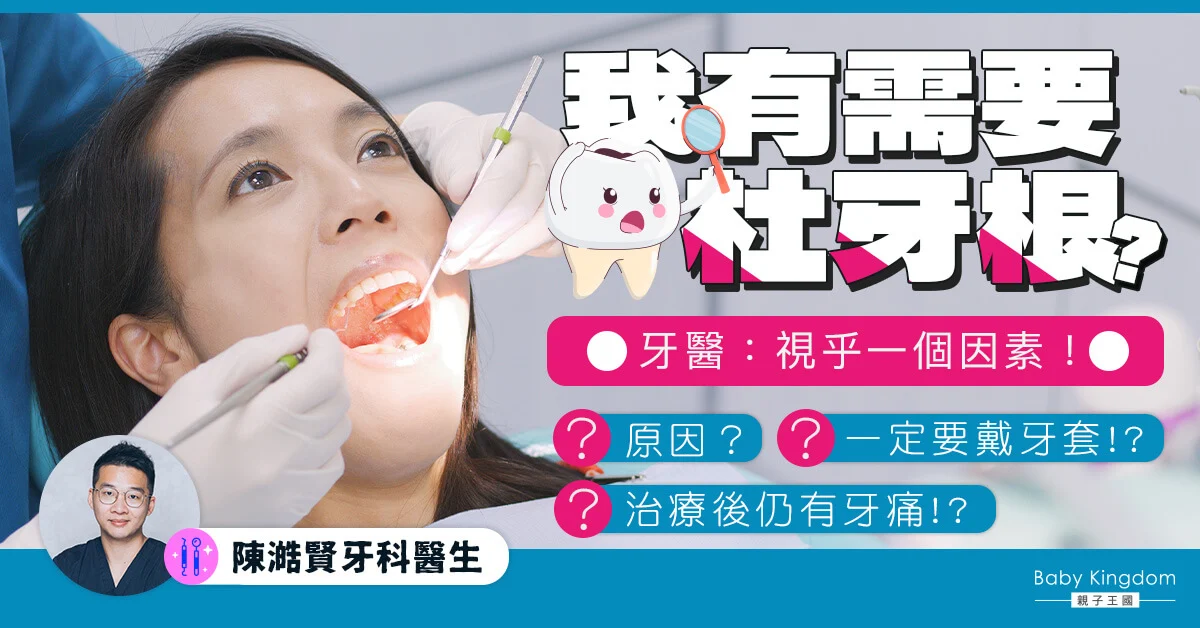
Dental HealthRoot CanalHow many sessions are needed to complete the treatment? Is it necessary to wear braces? What if I still have toothache after completing the treatment?
Root CanalThis refers to endodontic treatment or root canal treatment. When a tooth has severe decay or is fractured due to trauma, bacteria can invade the pulp chamber, causing inflammation and toothache. The purpose of root canal treatment is to open the pulp chamber, use instruments and medications to remove inflamed tissue and bacteria, and then seal the opening in the pulp chamber to prevent bacteria from re-entering the bone through the pulp chamber.
However, not every patient needs root canal treatment. The dentist will first check whether the pulpitis causing the patient's toothache is "reversible" or "irreversible". If the patient is diagnosed with irreversible pulpitis, a regular filling will not be able to solve the dental problem, and root canal treatment must be performed to remove the infected pulp tissue.
The number of root canal treatments can range from one to three. During the initial treatment, the dentist will administer local anesthesia and clean any infected, inflamed, or decayed pulp. At the follow-up appointment, the dentist will check for any remaining discomfort and determine if any tooth roots require further cleaning. Root canal filling will only be performed after the pain and infection have subsided, and finally, a crown will be placed over the tooth. After root canal treatment, the dentist will typically schedule a follow-up appointment approximately six months later to check the healing process.
While braces aren't always necessary after a root canal, dentists usually recommend them. After treatment, the dental pulp is removed, leaving the tooth without the nourishment it receives. This makes the tooth brittle and prone to breakage when biting hard objects. A braces (artificial crowns) protect the tooth, preventing breakage and damage to the root, and also help prevent bacterial contamination, thus avoiding the need for a second root canal.
Some patients still experience toothache after completing treatment, which may be mainly due to the following reasons:
(1) Bone infection
Although the necrotic pulp tissue has been removed, if bacteria are still lurking in the bone around the tooth root, it may cause inflammation and pain.
(2) Overfilling of root canals
If medical gutta-percha is overfilled, it may seep out from the root tip, causing pain behind the tooth root.
(3) Incomplete root canal removal
Sometimes, even after all the infected tooth roots have been identified, obstacles such as root canal curvature prevent complete cleaning of the root canals at the root apex, leaving bacteria still embedded in tiny spaces. If the infected area is not thoroughly cleaned, bacteria can continue to cause infection.
(4) The root canal filling did not completely seal the tooth.
If the filling in a tooth root canal does not completely seal the tooth, bacteria from saliva can lurk at the edges of the filling. If these bacteria get into the root canal, they can cause infection.
(5) Vertical fracture of tooth root
After dental root canal treatment, the tooth becomes brittle and fragile. Without braces, the root may crack vertically when biting hard objects or after being subjected to external impact.
(6) Filler or braces protruding
If the filling or braces in the tooth root are too large, the opposing teeth may rub against each other when biting, leading to toothache behind the tooth root.
If persistent inflammation or pain persists after root canal treatment, seek help from a dentist to determine the cause and try to save the tooth.
Author: Dr. Eric Chan


